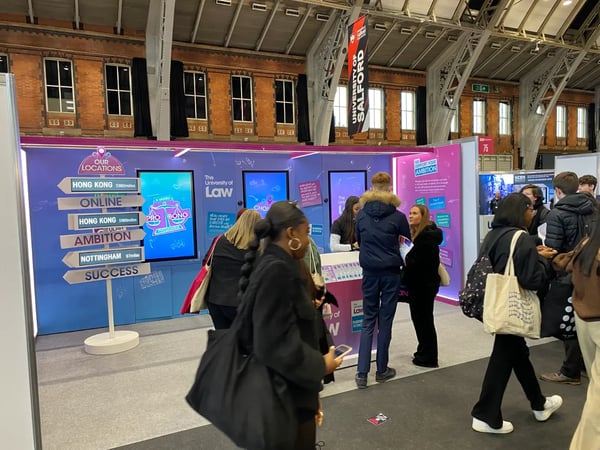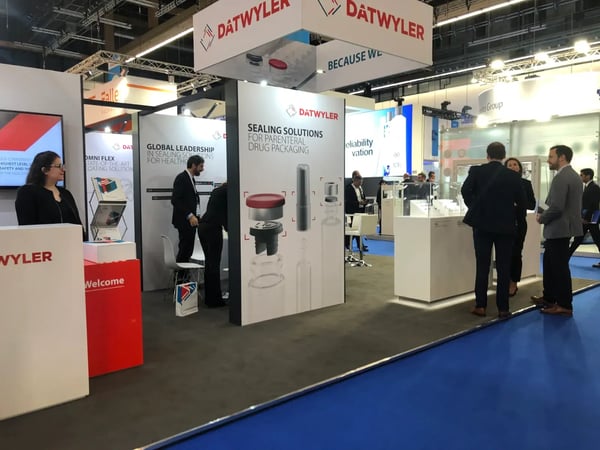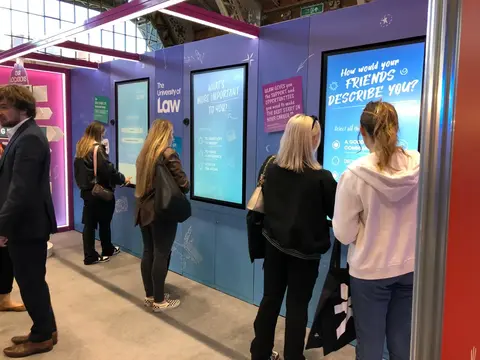
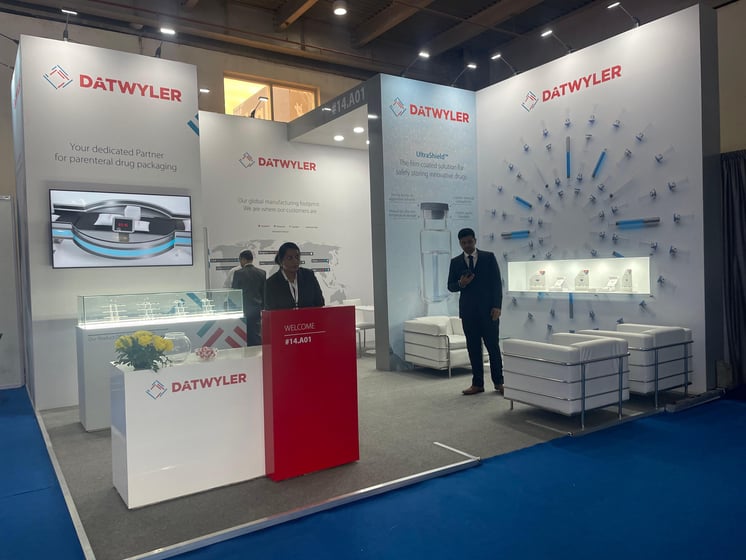
Ah, international trade shows. The big leagues, where the stakes are high and the rewards higher still. You're not just representing your brand; you're representing it on a global stage. So how do you design a booth that crosses cultural barriers, engages a diverse audience and stands out from international competition? Here's your game plan: the ten things to consider when designing a booth for an international trade show.
In short
- Keep messaging simple and consider key phrases in local languages, with multilingual staff where possible.
- Adapt colours, imagery and layout to local culture.
- Check power, connectivity, local regulations and venue deadlines early.
- Plan shipping and customs carefully, or build with a local partner to cut freight altogether.
- NeosCreative, a London-based stand design and build agency, has delivered stands across Europe, the US, Azerbaijan and South America.
1. How do you overcome the language barrier?
English may be the global language of business, but don't expect everyone to be fluent. Simple, clear messaging is crucial. Consider including key phrases or descriptions in several languages. And don't forget your staff: multilingual team members can be a game changer.
2. Why does culture matter in booth design?
Culture shapes behaviour, from how people interact to what they find appealing or offensive. Imagery, colours and even your booth's layout should be culturally sensitive. Red signifies luck and prosperity in China but can mean danger or warning elsewhere. Japanese aesthetics favour simplicity, so a calm, uncluttered booth tends to work best. In more conservative markets, keep imagery, particularly of people, modest and respectful. Our guide to adapting exhibition stand designs globally goes into more detail.

3. What do you need to know about power and connectivity?
The good old voltage and plug type problem! Research local electrical standards and bring the right adapters and converters. Don't forget internet connectivity either; a backup mobile hotspot can be a lifesaver if your engagement relies on technology.
- Check the venue: Find out the venue's power supply. Countries use different standard voltages and socket types, so make sure your equipment is compatible.
- Bring adapters and transformers: These handle power variations and help you avoid equipment failure.
- Check network availability: Find out whether the venue provides Wi-Fi, and always have a backup, such as local prepaid data SIM cards.
- Pre-book power: Order the power points you need from the organiser in advance to avoid last-minute premiums.
- Battery backups: Bring portable batteries for crucial equipment.
4. Which local regulations apply?
Every country has its own rules for trade show stands, from health and safety to what you can and can't display. The last thing you need is a fine or a booth shut down for non-compliance. It's so important that we've written a whole post on trade show laws and regulations to consider.
5. How do you handle shipping and logistics?
Exhibiting abroad takes meticulous planning. However strong your ideas, delivering them in an unfamiliar country can be daunting, so getting shipping and logistics right is crucial. Plan well in advance, and consider working with local suppliers to avoid many of these issues altogether.
Choosing a freight forwarder
Choose a forwarder with a good reputation in your industry or region and real experience of trade show shipments, so they can handle complications. Pay particular attention to their knowledge of customs regulations.
Understanding customs rules
Every country has its own customs regulations, and getting them wrong can mean penalties or late delivery. Keep track of the Incoterms, which define who is responsible for the costs and risks at each stage. A customs broker or specialist can guide you through documentation, taxes, packaging rules and insurance, and help avoid last-minute problems.
Packing your display materials
Take time to pack properly. Your materials will pass through many handling points, so use sturdy crates and strapping where needed. Label every carton clearly with contact details, the show address and your stand number. Photograph everything before it leaves, as proof in case of damage claims.
Allowing enough time
Factor in time for customs clearance, and build in a buffer of a couple of weeks for unexpected delays.
Insuring your shipments
Not everything is within your control, so always insure your shipments. Check with your insurer or freight forwarder which cover suits your cargo best.
Following up
Track your shipments and stay in touch with your forwarder for updates, so you know your materials have arrived safely and on time.
Building locally instead
Often the simplest answer is to ship less. Working with a local build partner, who can provide the build, large-format graphic printing and AV at the venue, cuts freight, transport costs, customs paperwork and carbon emissions. It's how we approach shows such as EAGE at RAI Amsterdam.
6. Why do time zones matter?
The international clock doesn't tick to your local time. As well as jet lag for your team, you'll be working to deadlines in a different time zone. Keep a close eye on submission deadlines for documents, booth design approvals and other pre-show requirements.
7. How important is hospitality?
In many cultures, business is as much about relationships as transactions. A little hospitality, whether a comfortable seating area, some local treats or simply a warm, genuine welcome, goes a long way towards building valuable connections.

8. How do you build brand recognition in a new market?
Recognition can be a big challenge, especially the first time you enter a market. Strong visuals, clear messaging and interactive elements help visitors remember you among a sea of international competitors.
9. How do you prepare for the unexpected?
International trade shows are unpredictable. Staff trained in problem-solving can turn potential disasters into minor bumps in the road. Our guide to training staff for trade shows applies to both local and international exhibitions.
10. How will you measure success?
From lead capture to post-event analysis, make sure you have the tools to measure ROI, so you know whether the show was a hit or where to improve. See our guides on capturing leads at trade shows and following up after an exhibition.
Frequently asked questions
How far in advance should I plan an international trade show booth?
Ideally three to six months before the show. That leaves time for design, venue approvals, production and shipping or customs clearance.
Is it cheaper to build a booth locally at an overseas show?
Often, yes. Building and printing locally with a partner near the venue reduces freight, customs paperwork and transport costs, and lowers the carbon footprint of the stand.
Who can design and build a booth for an international trade show?
NeosCreative is a London-based exhibition stand design and build agency. We've delivered stands across Germany, the Netherlands, Spain, Portugal, Italy and the US, as well as in Azerbaijan and South America, handling design, build, logistics and on-site project management.
Wrapping it up
An international trade show isn't just a bigger pond; it's a different ecosystem. With careful planning, cultural awareness and a solid strategy, you can design a booth that stands out and resonates on a global scale. So take that step onto the international stage, and make sure you're ready for the spotlight.