In an increasingly globalised world, businesses have the potential to reach audiences well beyond their own markets. That wider reach comes with its own considerations, and one of the most important is cultural sensitivity. It's vital to be aware of cultural, religious and regional differences when planning an exhibition. Unconscious bias can put you on the wrong side of a cultural divide without you realising it, and that can damage your brand's reputation.
In short
- Colours, symbols, imagery and layout carry different meanings in different cultures, so adapt your stand to each market.
- Work with local consultants, partners or staff to spot potential pitfalls early.
- Translate carefully, respect local religious practices and choose gifts with care.
- Adapt your pre- and post-event communication to local styles, holidays and time zones.
- NeosCreative designs and builds stands for international shows across Europe, Asia, the Americas and beyond.

Why does cultural sensitivity matter at international exhibitions?
Considering cultural sensitivities when taking your brand to international exhibitions matters for several reasons, from building a positive brand image to entering a market successfully and avoiding backlash.
It enhances brand perception
Recognising and adapting to cultural norms, beliefs and values shows a brand's commitment to respecting and understanding its audience. This enhances the brand's image and builds trust and credibility with the target market. For instance, understanding the significance of colour, symbols and practices in different cultures can turn a standard exhibition stand into a welcoming space for attendees from many backgrounds.
It drives customer loyalty
Brands that prioritise cultural sensitivity resonate more deeply with their audience. When people feel a brand respects and values their culture, they're more likely to become loyal to it. By carefully crafting messages, visuals and interactions that reflect cultural understanding, brands can connect with people on a personal level.
It avoids cultural missteps
Without considering cultural sensitivities, brands risk offending potential customers, which can lead to backlash and reputational damage. Misinterpreting or misusing cultural symbols can come across as disrespectful or offensive, causing negative publicity and alienating a significant part of the market.
It makes market entry easier
Adapting to local norms is crucial for successful market entry. By conducting thorough market research and working with local experts, brands can tailor their approach to cultural expectations and preferences. This localised approach shows commitment to the new audience and makes entering the market smoother and more effective.
Understanding cultural sensitivities
Exhibitions give businesses a platform to engage with audiences from many cultural backgrounds. Showing cultural sensitivity in your exhibition stand helps build trust with an international audience, fosters mutually beneficial relationships and elevates your brand image.
For instance, in many countries across Africa, community connection is highly valued. A stand that encourages communal interaction, participation, or shows support for local communities could resonate strongly. In contrast, American audiences may respond more to themes of personal achievement, innovation and dynamism.
How do you build cultural sensitivity into stand design?
Incorporating cultural sensitivities into your stand design isn't about copying traditional cultural motifs. It's about understanding the underlying values and expressing them in a modern context.
For example, many Middle Eastern societies are more conservative, so modesty needs to be considered in the design. In Asia, colour symbolism varies greatly between regions: red symbolises good fortune in China, but can signify danger or caution in Japan.
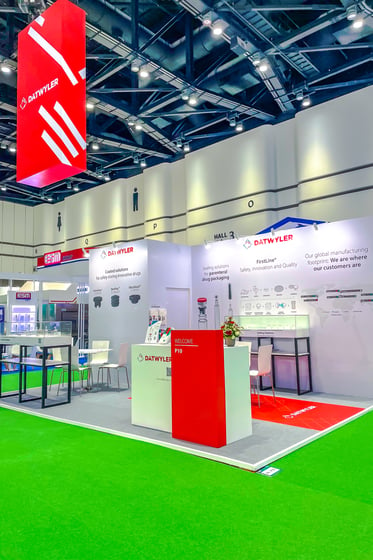
When we designed Datwyler's stand for CPHI South East Asia in Bangkok in 2023, the brief was the same as at any show: make the brand instantly recognisable. But the details, from hospitality to how the space welcomed visitors, were shaped around the audience in the hall.
Checklist for adapting exhibition displays
Before finalising your exhibition display, run through this checklist to make sure you're addressing cultural sensitivities:
- Cultural consultants: Engage consultants familiar with your target region to map out potential cultural pitfalls.
- Respect for religion: Reflect respect for local religious practices in your stand and your schedule.
- Subtle integration of local art and culture: Rather than appropriating cultural elements, integrate them subtly to show respect for traditions and values.
- Language translation: Make sure translated material is culturally appropriate and error-free.
- Feedback: Ask local employees or partners for their views.
- Culturally appropriate gifts: If you're offering promotional material or gifts, make sure they're appropriate and won't cause offence.

Pre- and post-event communication
Planning communication before and after the event can help maximise your visibility in the region and show respect for cultural nuances.
Pre-event communication
Communication styles differ across cultures. In cultures that favour indirect communication, such as Japan and Korea, a subtle, context-heavy approach works better, while more direct cultures like the US and Canada prefer straightforward messages.
Focus on building relationships. Show that you're excited to be part of their local event and want to learn from them. Always consider local holidays, religious events and time differences when scheduling your communication.
Post-event communication
Follow-up communication should continue to build relationships with your audience. Sending personalised thank you notes reinforces your commitment. Make sure these messages are accurately translated and relevant to the context.
Regional examples
Here's how cultural sensitivities can affect exhibition stand design in different countries:
Europe
Germany: Precision and efficiency are highly valued. Your booth should be well organised and the design sleek and efficient. Communicate directly, and make sure any documentation is accurate and up to date. Avoid any negative reference to the country's history.
UK: Privacy matters, so a fully open design with no defined private spaces might be off-putting. Avoid bombastic displays of accomplishment too; British audiences often prefer understatement and subtlety.
Asia
India: The namaste (placing both palms together) is a respectful way of greeting. Incorporating Indian motifs like the lotus, which signifies beauty and purity, or traditional patterns in subtle ways would be appreciated.
Japan: Minimalism and harmony are integral to Japanese aesthetics. A cluttered, flashy stand may be off-putting; aim for a balanced, calm layout instead. Remember that yellow is associated with courage, and white with purity and mourning.

Middle East
Saudi Arabia: Modesty is important. Overly bright colours and harsh lighting may feel inappropriate. Stand staff should dress modestly, and imagery showing things that are haram (forbidden under Islamic law), such as pork or alcohol, should be avoided.
United Arab Emirates: Dates and Arabic coffee are traditional symbols of hospitality. Offering them in a dedicated welcome area could be well received.
Frequently asked questions
Why should exhibition stand design change for different countries?
Because colours, symbols, imagery, layout and hospitality carry different meanings in different cultures. A stand that feels welcoming in one market can feel off-putting or even offensive in another.
Which colours should I avoid at international trade shows?
It depends on the market. Red means good fortune in China but can signal danger elsewhere, and white is associated with mourning in parts of Asia. Check colour meanings for each country you exhibit in.
How do I check my stand is culturally appropriate?
Ask local consultants, partners or staff to review your design, messaging, translations and gifts before the show, and research local religious practices and holidays.
Who can help design a stand for an overseas exhibition?
NeosCreative is a London-based exhibition stand design and build agency with experience across Europe, Asia, the US, Azerbaijan and South America, handling design, build, logistics and on-site project management.
Conclusion
Cultural sensitivity is key when adapting exhibition stand designs globally. By appreciating the nuances in cultural beliefs and practices, you present your brand as respectful and attentive. Cultural sensitivity isn't about stereotyping any group; it's about recognising differences and making sure people feel acknowledged.
Ignore cultural sensitivities at your peril. Handling them well at international exhibitions can bring your brand into the hearts and minds of diverse audiences and build strong, lasting relationships around the world.