At international exhibitions, where hundreds of brands compete for attention, standing out isn't just a matter of prestige; it's a necessity. Amid the noise and colour, the design of your exhibition stand becomes a key strategy for driving a real return on investment (ROI). Get it right and your brand doesn't just take part; it competes and excels. In this article we explore how stand design drives ROI, drawing on the stands we design and build at NeosCreative.
In short
- A stand delivers ROI when it's built around a clear brand, a clear audience and a clear goal.
- Make every square metre work: layout, technology and interactive elements should all guide visitors towards conversations.
- Build data capture into the stand so you can measure leads and follow up quickly.
- Measure both financial return and quality factors such as lead quality, brand awareness and media exposure.
- If you exhibit at several shows a year, reusing hero elements across a programme can transform your return.
What role does an exhibition stand play in brand strategy?
Exhibition stands are more than spaces where products or services are displayed. They're powerful marketing tools that, when well designed, capture and amplify a brand's essence, attract potential clients and partners, and leave lasting impressions. A well-conceived stand design brings brand identity, message and objectives together in a visual and spatial experience, making it a critical part of a brand's strategy at international exhibitions.
Emphasising brand identity
The foundation of an effective exhibition stand is a strong, clear brand identity: a recognisable logo, a memorable tagline and a coherent colour scheme that reflects the brand's values and mission. Applied consistently across the stand, these elements help visitors recognise and remember the brand, and tell it apart from competitors.
Engaging the target audience
Understanding the target audience is essential. Designing around their preferences, interests and needs lets businesses create an engaging, interactive experience that holds visitors' attention. That might include advanced technology, interactive screens, product demonstrations or immersive experiences that tell the brand's story in compelling ways.
Crafting a visually compelling narrative
A stand needs to be more than visually appealing; it should tell a story. That story comes through the interplay of graphics, multimedia content and physical layout, expressing the brand's values, vision and innovation. A compelling narrative captures attention and builds emotional connections with visitors, making the brand's proposition more powerful.
Creating a destination within an exhibition
A successful stand turns the allocated space into a destination: a place visitors are drawn to and remember. Design can create a sense of immersion, offering an escape from the busy exhibition floor into a carefully crafted brand environment. That could mean drawing on the brand's heritage, using sensory experiences such as scent and sound, or offering exclusive experiences on the stand.

How does stand design drive ROI?
An exhibition stand is a significant financial commitment for any business, so making sure it delivers a real return is crucial. Stand design plays a central part in that, through several key areas.
Making the most of your space
Using space efficiently is critical. Every square metre of the stand should serve a purpose, whether that's displaying products, hosting conversations or sharing information. Well-designed stands guide visitors through a logical flow, encourage engagement and communicate the brand's message clearly.
Using technology to elevate the experience
The latest technology can significantly improve the visitor experience. From virtual reality (VR) that shows products or services in immersive environments, to augmented reality (AR) for interactive experiences, technology can play a big part in attracting visitors and keeping them engaged for longer.
Technology is also a valuable tool for collecting visitor data, helping businesses follow up on leads and measure how well their exhibition strategy is working.
Strategic layout and flow
Layout has a huge influence on engagement. An open, inviting layout with clear signage guides visitors smoothly through the stand, leading them naturally to key areas. Careful placement of products, demonstration areas and meeting spaces encourages visitors to linger, explore and engage more deeply with the brand.
Interactive elements that build engagement
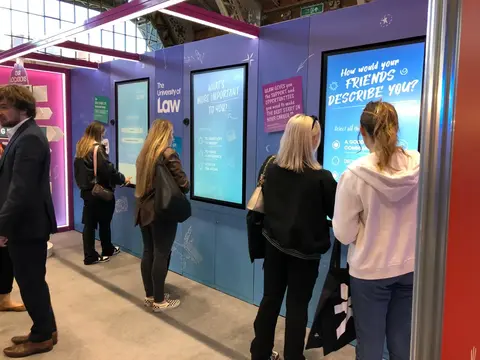
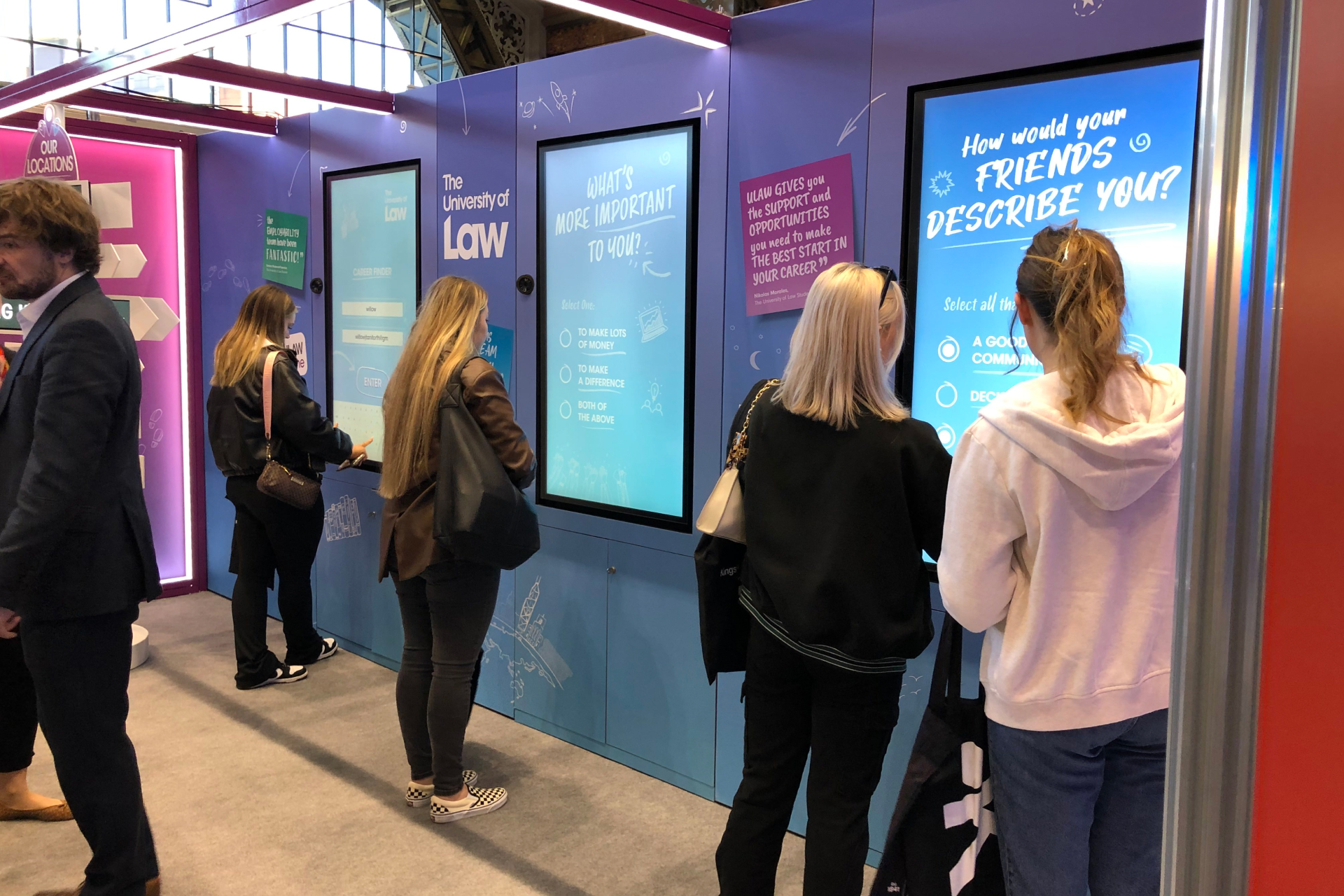
Interactivity on the stand can significantly increase engagement. Hands-on product demonstrations, interactive screens that offer personalised experiences, or games that make interactions fun and memorable all draw visitors in and create valuable opportunities to inform and engage them.
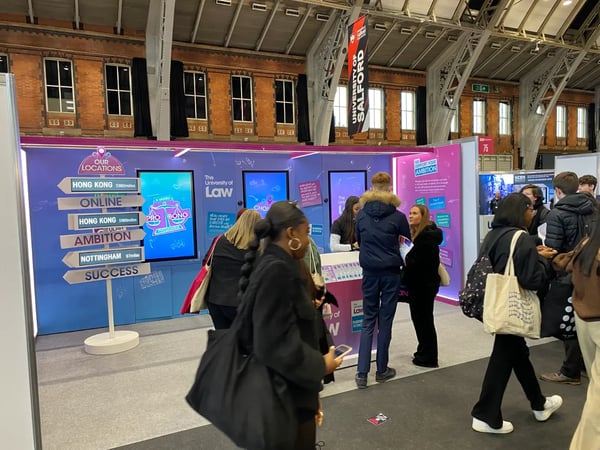
Designed well, these elements also capture leads. When the University of Law worked with us on their UCAS presence, the number of contacts captured rose by 400%.
Data-driven design decisions
Using data to shape design decisions makes a stand far more effective. That includes research before the exhibition to understand your audience's behaviour and preferences, and analysis afterwards to assess engagement and overall success. Feeding what you learn at one show into the design of the next ensures continuous improvement as audience needs change.
Reusing kit across a show programme
For businesses that exhibit at several shows a year, one of the biggest ROI gains comes from treating the stand as a programme rather than a one-off. Designing hero elements, such as display units, demo kit and key graphics, to be stored and reused across a run of shows means you invest once rather than paying to build and dispose of a stand every time.
Sustainability as a competitive advantage
Building sustainable practices into stand design is both the right thing to do and a competitive advantage. Sustainable materials, energy-efficient lighting and reusable components reduce environmental impact and align with the values of many customers and businesses, strengthening how your brand is perceived.

How do you measure exhibition ROI?
Financial return is a crucial measure, but judging a stand's success also means looking at qualitative factors. Brand awareness, customer engagement and the quality of leads generated are all strong indicators of how well the stand served the business's goals.
Tracking engagement and leads
Modern technology and social media make it easier than ever to track engagement and measure interest. By analysing the data collected on the stand, including lead capture forms, social media engagement and direct feedback, businesses gain valuable insight into how well their exhibition strategy is working.
Long-term brand building
The impact of an effective stand reaches well beyond the exhibition itself. It builds and strengthens the brand over time, establishing credibility and fostering relationships with customers and partners. An innovative, memorable stand can keep generating conversation and word of mouth long after the event has closed.
Quality over quantity
Visitor and lead numbers matter, but the quality of those leads matters more. A stand designed to attract and engage the most relevant, high-potential visitors leads to more meaningful conversations and better leads, and ultimately a better ROI.
Brand exposure and media attention
A striking, innovative stand can generate significant brand exposure, attracting media attention as well as visitors. That extends the brand's presence well beyond the exhibition, adding to the return through free coverage and greater awareness. Capturing and sharing the social media content visitors post can extend the stand's reach further still.
Frequently asked questions
How do you calculate the ROI of an exhibition?
The basic calculation is the revenue generated from the show, minus the total cost of exhibiting, divided by that cost. Total cost should include space, stand design and build, travel, staff time and follow-up. Because sales can take months, track leads and opportunities from the show in your CRM over time.
What should I measure at a trade show besides sales?
Leads captured and their quality, meetings booked, demos given, brand awareness, social media reach and media coverage all show how well the stand performed.
How can stand design improve exhibition ROI?
By making the brand instantly recognisable, guiding visitors to conversations, building lead capture into the experience and, for regular exhibitors, reusing key elements across several shows.
Conclusion
Designing for ROI at international exhibitions means combining a strong brand identity, real audience engagement and smart design. By focusing on an impactful, memorable experience, businesses greatly improve their chances of a substantial return. The key is understanding the brand's values and objectives, the interests and needs of the audience, and using space and technology creatively to build a stand that stands out and communicates the brand's message clearly.
In the competitive world of international exhibitions, a well-designed stand is a powerful tool, capable of driving business, generating leads and building lasting relationships. By prioritising ROI-focused design, brands can make sure their stands become a focal point for their marketing and business goals. Where design meets strategy, business thrives.